
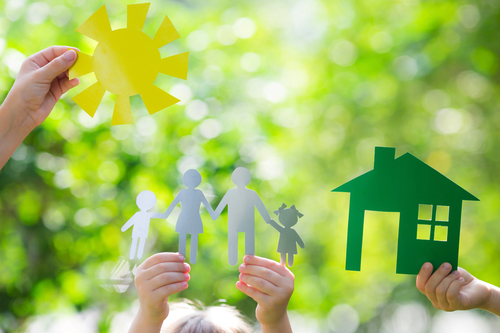
If you’re embarking on a journey to a green, sustainable lifestyle, start by making simple changes around the house. Although our lives have become increasingly busy and scheduled, Americans still spend 90 percent of our time indoors, according to Forbes. It only makes sense to try to make this time as healthy and eco-friendly as possible. Start by assessing these three major areas where you can reduce your carbon footprint.
Reduce Waste
Nearly everything we buy comes in a package. Sometimes there’s even packaging inside of the packaging! It gets to the point that it seems impossible to truly reduce waste in our lives. In most homes, the bulk of trash/waste comes from the kitchen and bathroom in the form of food packaging, personal care product containers and paper products.
Think of ways you can reuse plastic containers, boxes or make-up compacts for storage and organization purposes. It’s unrealistic to eliminate all paper products from a home, but you can reduce the amount of waste they create by choosing reusable napkins, towels and cleaning supplies. Recycled cotton clothes are perfect for dusting.
Choose Green Household Products
Think of items you always have on hand around the house, like personal care and cleaning products, and seek out eco-friendly companies and brands to purchase them from. It’s easy to feel good about the products you’re using in your home and on your body when you buy from companies that are committed to sustainability and giving back to their local, as well as global communities.
Reduce Energy Consumption
We’ve all heard it a million times: Compact fluorescent light bulbs (CFLs) save energy, yet they don’t seem to burn as bright as incandescent bulbs. Can they really save energy and reduce costs? According to the Environmental Defense Fund: Yes, they can and do.
CFLs use approximately 75 percent less energy than incandescent bulbs, which require heating a filament which generates heat (i.e., wasted energy), and are able to provide the same amount of light. Not all CFLs are created equal and different wattages, sizes or colors should be considered for a variety of purposes.
While some eco-products may come with a higher price tag, they’re often worth the investment and peace of mind knowing your home is a safe haven, free from as many pollutants as possible.On top of making small invests in CFLs or low-flow water systems to lower household energy consumption and ultimately reducing your home’s carbon footprint, these habits can add up to a lifetime of health and savings. You can also embrace the eco-friendly lifestyle by switching from traditional electricity to electricity generated from renewable resources. The best way to change electricity is to compare electric rates. People just starting to transition typically make this change first because it not only lessens their impact on the environment in a significant way but it also significantly lowers their monthly electric bill.
We all make a million little choices every day about our actions and how they affect the world at large, from turning off faucets and lights when they aren’t essential to the cars and products we purchase. Enacting all these tiny changes can quickly become overwhelming, but you can confidently begin implementing green changes, today, by focusing on these major areas of consumption and waste production.
